Beds · 3 min read
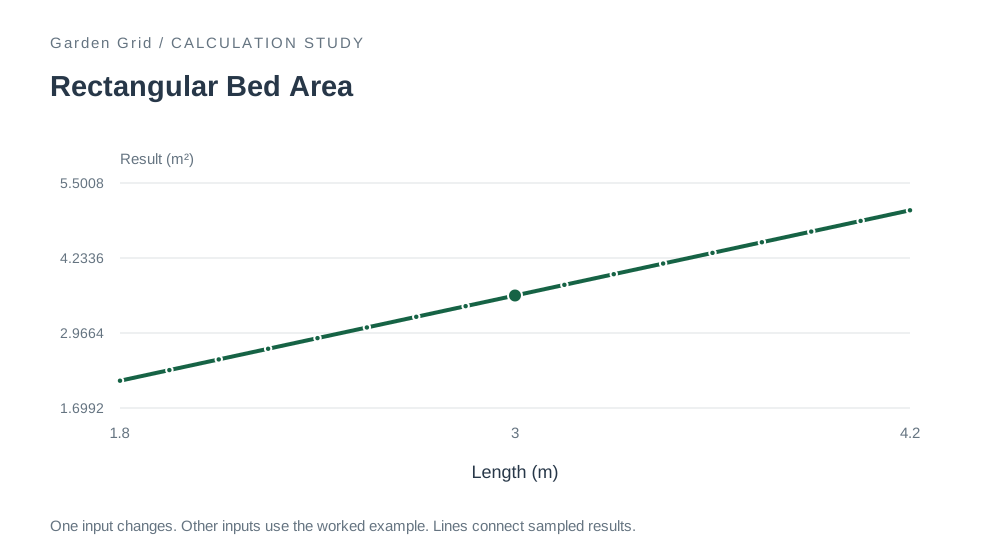
Rectangular Bed Area: the method, worked through
A measured bed area anchors soil, mulch and planting estimates.
Practical quantities for beds, containers, watering and seasonal garden records.
Beds · 2 inputs
A measured bed area anchors soil, mulch and planting estimates.
Open calculator ↗A circular bed's footprint depends on the square of its diameter.
Open calculator ↗Triangular corners can be included in a garden plan by measuring a base and its perpendicular height.
Open calculator ↗A raised bed behaves like a shallow box for a first soil-volume estimate.
Open calculator ↗Bag volume translates the planned fill into a whole-bag purchase.
Open calculator ↗A straight-sided round container can be estimated as a cylinder.
Open calculator ↗A linearly tapered round pot resembles a conical frustum.
Open calculator ↗A rectangular planter volume helps estimate how much growing medium to prepare.
Open calculator ↗Mulch demand follows the area to cover and the chosen layer depth.
Open calculator ↗Whole-bag purchasing rounds the volume requirement upward.
Open calculator ↗A thin top-dressing can be planned separately from the full bed fill.
Open calculator ↗A volume-based mix ratio assigns part of a batch to compost.
Open calculator ↗Subtracting known components preserves the target batch volume in a simple additive recipe.
Open calculator ↗A square grid estimates planting positions by fitting equal spacing cells into a rectangular bed.
Open calculator ↗Different in-row and between-row spacing allows a row-based planting estimate.
Open calculator ↗A spacing-cell convention allocates one plant per complete segment along the row.
Open calculator ↗The bed width divided into row-spacing cells gives a consistent row count.
Open calculator ↗Working backward from plant count estimates row length including two half-spacing edge margins.
Open calculator ↗A germination rate converts the desired average seedling count into a sowing estimate.
Open calculator ↗The expected seedling count combines seed number with a germination fraction.
Open calculator ↗Packet counts turn a seed plan into whole purchase units.
Open calculator ↗A cell tray plan assigns one target seedling to each available cell.
Open calculator ↗Cell volume and tray count determine the total medium to prepare.
Open calculator ↗Counting a sowing at day zero and at each full interval gives the number of scheduled batches.
Open calculator ↗One millimetre spread over one square metre equals one litre, linking irrigation depth and volume.
Open calculator ↗An applied volume can be expressed as an equivalent uniform depth.
Open calculator ↗A bucket-tested flow rate translates a water-volume target into hose runtime.
Open calculator ↗Timing a known bucket volume provides a practical flow measurement.
Open calculator ↗Emitter count and rated flow estimate the demand of a drip zone.
Open calculator ↗Dividing a volume target by zone flow gives a first runtime estimate.
Open calculator ↗Catchment area and rainfall depth estimate potential collection after an efficiency allowance.
Open calculator ↗Comparing collected volume to tank capacity shows how much storage it represents.
Open calculator ↗A steady daily demand converts stored water into a simple duration estimate.
Open calculator ↗Summing equal watering sessions makes a weekly consumption record easier to compare.
Open calculator ↗Measured retained water compared with applied water describes a defined efficiency estimate.
Open calculator ↗A rectangular bed perimeter gives the total edging run.
Open calculator ↗A circular border's length follows its circumference.
Open calculator ↗A straight uniform path uses rectangular-layer geometry.
Open calculator ↗An area-based roll estimate includes a user-entered allowance for overlaps and cuts.
Open calculator ↗A labeling plan keeps repeated rows and spare labels visible in one count.
Open calculator ↗Repeated support lines can be totalled before adding an allowance for ties.
Open calculator ↗An average per-plant harvest helps compare your own recorded batches.
Open calculator ↗Area-normalized harvest makes differently sized plots easier to compare.
Open calculator ↗A survival rate records the share of transplanted plants still present at a chosen checkpoint.
Open calculator ↗Irrigation divided by harvested mass offers a simple record-based comparison.
Open calculator ↗A simple growing-degree-day value accumulates warmth above a chosen base temperature.
Open calculator ↗A daily average summarizes production across a recorded interval.
Open calculator ↗Area conversion helps compare garden plans that use different unit systems.
Open calculator ↗A US liquid gallon equals 3.785411784 litres.
Open calculator ↗Bulk landscape materials sold in cubic yards can be compared with bag volumes in litres.
Open calculator ↗No matching tools. Try a shorter search or choose all categories.
A measured bed area anchors soil, mulch and planting estimates.
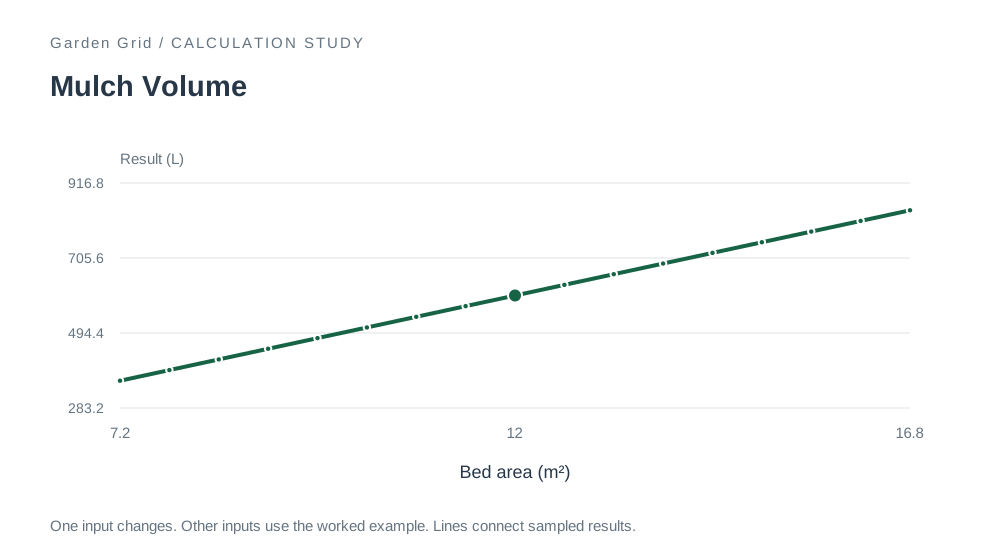
Mulch demand follows the area to cover and the chosen layer depth.
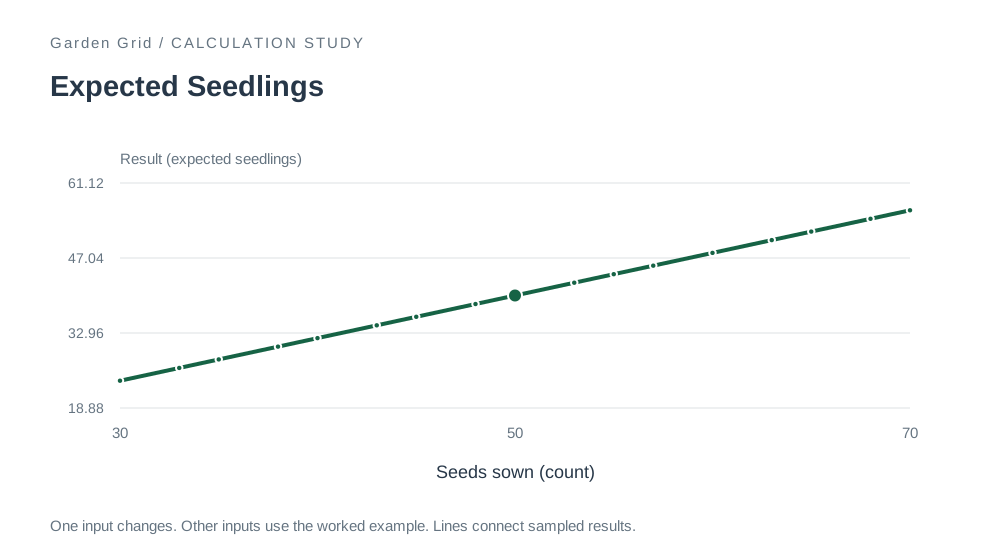
The expected seedling count combines seed number with a germination fraction.